

The Gips Procedure and laser pilonidoplasty are minimal procedures which are combined in the pilonidal SILaC procedure to yield a lengthy period of symptom freedom, with a brief recovery period and very little cosmetic change.
Many pilonidal patients request smaller, less invasive surgical treatments. In response to this need, the PTCNJ has handpicked a collection of such techniques that uses tiny incisions and spares patients the anatomy-altering effect of our curative gluteal cleft-lift procedure but still provides for select patients a robust period of symptom freedom.
Using these techniques, we have so designed the Minimally Invasive Pilonidal Treatment (MIPiT) protocol, the backbone of which is the evidence-based Gips procedure in which fine hemostats, scalpel, and small surgical instruments called trephines are used to excise the pilonidal pits and clear any associated sinus tracts of embedded hair shafts and diseased inflammatory tissue (Gips M et al, Diseases of the Colon and Rectum 2008).
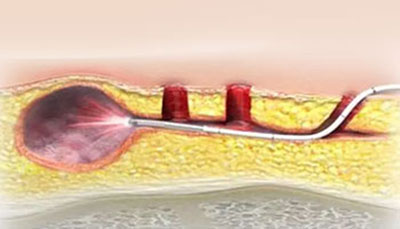
Our regimen also utilizes the meticulously calibrated thermal energy of the NeoV continuous wave laser system (ForTec Medical- Hudson,Ohio) to seal closed the pit cavities and any associated abscess cavities (see inserted diagram). The combination of these two procedures, namely the Gips and laser pilonidoplasty, is now most commonly referred to as the pilonidal sinus laser-assisted closure, or the SILaC procedure (Sluckin TC et al,Techniques in Coloproctology 2022).
Drawing from the robust pilonidal microbiology data available only at a dedicated center such as ours, we augment the SILaC procedure with the judicious use of antibiotic therapy, both in a tailored oral form and in a topical cream-based form to hasten healing and decrease recurrence risk. Finally, we round out our minimally-invasive regimen with laser hair removal.
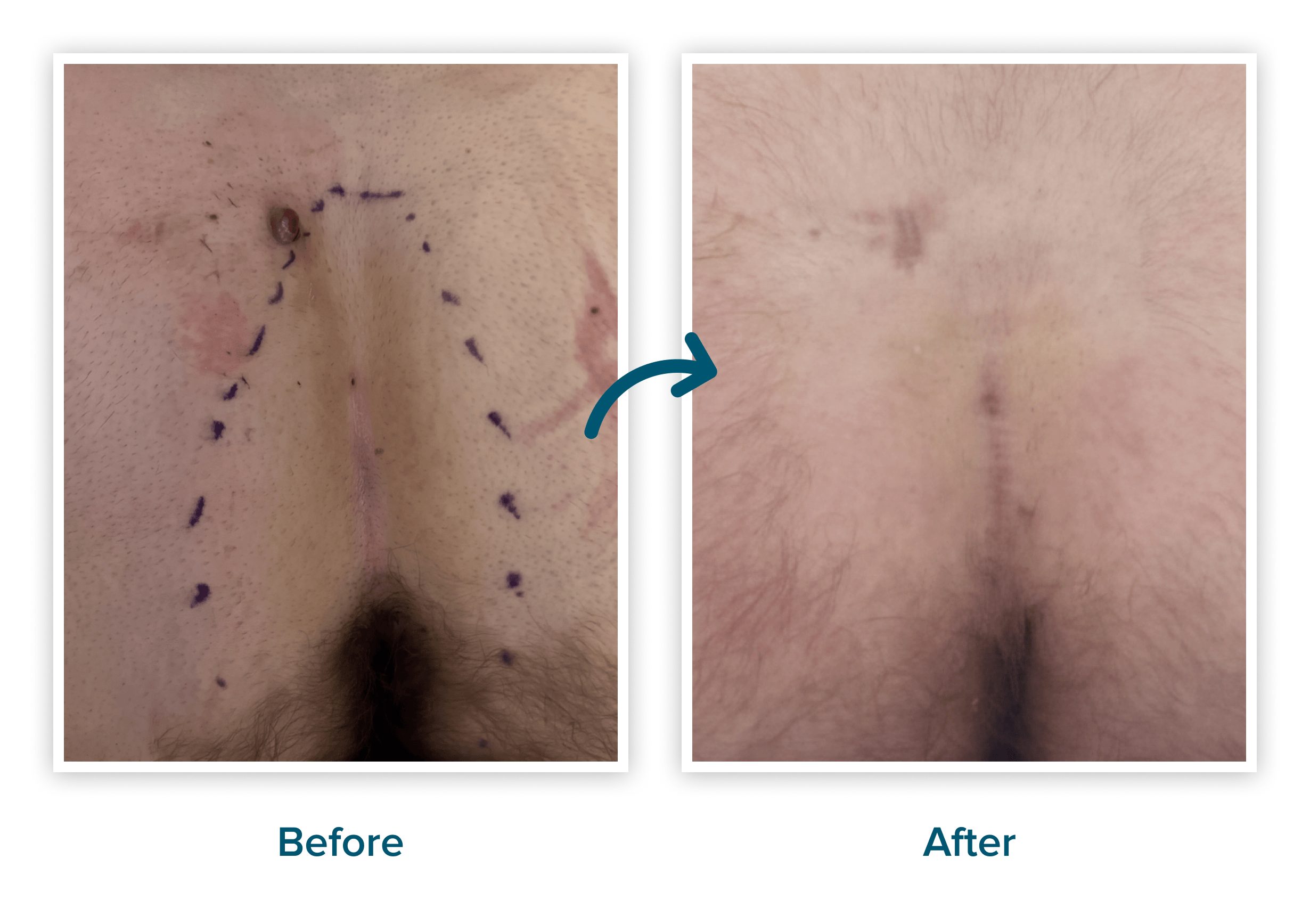
The following are before and after photographs of a PTCNJ minimally-invasive pilonidal treatment patient. In the Before image, note the large draining secondary skin opening (“pyogenic granuloma”) of a pilonidal sinus tract in the left upper aspect of the cleft. The After image shows same patient after our SILaC procedure, six weeks of healing, and multiple laser hair removal sessions.
FAQs
Minimal cosmetic changes are seen because incisions are all 1 cm or less, and the gluteal cleft anatomy is not altered in any way.
The MIPiT protocol is ideally suited for those patients with early and mild disease, particularly those with one chronically draining pilonidal sinus tract or those with one pilonidal abscess requiring drainage. Of course, the protocol is ideally suited for those desiring long-term symptom freedom with minimal surgical intervention. We do not offer the procedure to patients with non-healing pilonidal surgical wounds. We are also quite selective in patients with low pilonidal sinus disease.
Minimal wound care is necessary following the SILaC procedure. A small gauze overdressing is removed and discarded on the first postoperative day prior to the first shower, in which the incisions are bathed with soap and warm water. Generally following showers for the first several weeks, a fresh gauze pad is applied to the wounds until scabs form.
No work or sitting restrictions are imposed following the SILaC procedure. We do restrict patients from certain exercises such as distance bicycling & equestrian activities after the procedure.
We perform the procedure under intravenous sedation with local anesthetic to fully numb the area.
CONTACT US TODAY!
Contact us today and let us help you leave your pain behind.

